

What is Identity Drift & Do You Have It?

What is Identity Drift & Do You Have It?
When Life Keeps Moving but You No Longer Feel Like Yourself
There are times when your life checks all the boxes, yet your inner compass tells you something is out of place.
- Your life still functions.
- You still meet your responsibilities.
- You still recognize the person you are on paper.
And yet—there’s a subtle sense that you’re no longer living from yourself. You’re living around yourself. This experience is far more common than most people realize, and it has a name.
It’s called identity drift.
Identity drift doesn’t announce itself with chaos or collapse. It arrives quietly. It shows up as a dulling of aliveness, a loss of inner orientation, or a growing gap between who you know yourself to be and who you’re actually being day to day. And importantly: identity drift is not a personal failure. It’s a nervous-system response.
What Identity Drift Really Is…
Identity drift happens when your internal sense of self gradually reorganizes around coping rather than truth.
- You don’t forget your values.
- You don’t lose your insight.
- You don’t suddenly become someone else.
Instead, your system adapts to sustained pressure, uncertainty, or emotional load—and in doing so, it begins prioritizing safety, predictability, and functionality over authenticity, expression, and expansion.
From a neuroscience perspective, identity is not a fixed personality trait. It is a living state, shaped by physiology, emotional regulation, and perceived safety in the environment. Research on stress and adaptation shows that when the brain remains in prolonged stress states, it narrows behavior and self-perception to conserve energy and maintain stability (McEwen, 2007).
From a spiritual perspective, identity drift has been described for thousands of years as forgetting—a temporary identification with roles, fear, or conditioning rather than essence. As Eckhart Tolle explains, most human suffering arises not from circumstances themselves, but from identification with the conditioned mind rather than the deeper self (Tolle, 2004).
In both frameworks, the message is the same: You don’t lose who you are. You lose access to who you are.
Why Identity Drift Happens (The Biological Layer)
To understand identity drift, we have to start with the nervous system. Your nervous system is not designed to make you fulfilled, inspired, or aligned. Its primary role is to keep you alive. It constantly scans your internal and external environment for cues of safety or threat, and it organizes your behavior accordingly.
When life becomes consistently demanding—emotionally, relationally, financially, or mentally—the nervous system adapts by favoring what is familiar over what is expansive. This happens even when the familiar pattern is uncomfortable or limiting.
According to the Polyvagal Theory, when the nervous system perceives prolonged uncertainty, it shifts into protective states that reduce openness, creativity, and social engagement in favor of efficiency and self-protection (Porges, 2011). This is one of the key reasons people stay in identities they’ve outgrown. Not because they lack courage or clarity—but because their system has learned that predictability equals safety.
How Chronic Stress Changes Self-Perception
Long-term stress doesn’t just affect mood. It alters how the brain processes the self. Elevated cortisol levels impair regions of the brain responsible for reflection, emotional integration, and flexible thinking—particularly the hippocampus and prefrontal cortex (McEwen & Morrison, 2013). When these regions are compromised, the brain relies more heavily on habitual patterns and less on conscious choice.
This creates a subtle but powerful shift: identity becomes more rigid.
Instead of responding from presence, intuition, or values, behavior becomes driven by efficiency, responsibility, or emotional survival. Over time, this creates a sense of disconnection that many people misinterpret as burnout, loss of motivation, or even depression. In reality, it is often identity drift—a system that has adapted so well to pressure that it no longer has room to be fully itself.
Conditioning: When Coping Becomes Who You Are
Human beings are remarkably adaptive. When life asks more of us, we rise to meet it by forming identities that help us function.
- The capable one.
- The strong one.
- The reliable one.
- The one who doesn’t need much.
These identities are not wrong. In fact, they are often born from resilience. But neuroscience shows that repeated emotional and behavioral patterns strengthen neural pathways, even when those patterns are no longer aligned with who we are becoming (Doidge, 2007). Over time, coping strategies quietly solidify into identity. This is how identity drift becomes normalized. It doesn’t feel like losing yourself—it feels like “this is just how I am now.”
Why Identity Drift Is Not a Problem to Fix
One of the most important reframes around identity drift is this: Identity drift is not a mistake.
It is a biological intelligence responding to sustained demand. Ancient wisdom traditions recognized this long before neuroscience could explain it. In Buddhism, this state is referred to as avidya—a forgetting of true nature, not a moral failing (Rahula, 1974). In Hindu philosophy, it is described as maya—identification with the temporary rather than the eternal self (The Upanishads). In Christian mysticism, it is framed as separation from divine remembrance, not from God itself (Merton, 1961). Across traditions, the message is consistent: forgetting is human. Remembering is the practice.
Why Recognizing Identity Drift Matters
When identity drift goes unnoticed, it quietly shapes behavior, emotional patterns, and life decisions without conscious consent.
Psychological research shows that self-concept plays a central role in decision-making, especially under stress (Oyserman et al., 2012). When identity is organized around survival, choices prioritize maintenance rather than meaning. This is why people often feel like they are living a life that “works” but doesn’t feel like theirs.
Over time, this misalignment creates emotional exhaustion. Maintaining coherence between inner truth and outer behavior requires energy. When the nervous system is already taxed, that effort becomes unsustainable, leading to fatigue, numbness, or burnout (Maslach & Leiter, 2016). This exhaustion is not a sign that something is wrong with you. It is a signal that your system is asking for realignment rather than improvement.
The Subtle Signs of Identity Drift
Identity drift rarely looks dramatic. More often, it shows up quietly. You may notice that things which once brought joy no longer register the same way. You may feel emotionally flat or disconnected from your intuition. You might find yourself operating from “should” rather than inner resonance or feeling strangely tired by choices that used to feel natural. Many people describe this state as knowing who they are intellectually but not feeling connected to that identity in their body.
This matters, because identity is not held in the mind alone. It is a lived, physiological experience.
Identity Is a State, Not a Trait
Modern neuroscience confirms what contemplative traditions have long taught: identity shifts with state.
When the nervous system feels safe, the brain can access creativity, empathy, intuition, and meaning-making. When it feels threatened or overloaded, those capacities go offline (Siegel, 2012). This is why identity change cannot be forced through willpower or positive thinking alone. The system must first feel safe enough to allow a fuller expression of self.
Returning to Yourself Without Force
The return from identity drift does not happen through striving. It happens through regulation, repetition, and gentle remembering.
Before asking big questions about purpose or direction, the nervous system needs signals of safety. Simple practices—grounding, breath, slowing down—restore the body’s capacity to access identity naturally (Porges, 2017).
Language also plays a role. Words don’t just influence thoughts; they influence physiological responses. Research shows that self-referential language can directly affect emotional regulation and stress levels (Kross et al., 2014).
This is why identity-based language is so powerful. Not because it forces belief, but because it signals safety and possibility to the nervous system. Repetition is key. Neuroplasticity is shaped by repeated experiences paired with emotional engagement (Hebb, 1949). Small, consistent reminders—words, symbols, embodied cues—create pathways back to alignment without effort.
And finally, the body must be included. Trauma research shows that integration happens somatically, not just cognitively. The body is where identity is lived and remembered (Van der Kolk, 2014).
Identity Drift as a Threshold
Identity drift often appears right before expansion.
It emerges when an old self no longer fits, but the system hasn’t yet stabilized into what comes next. Rather than viewing this as something to fix, it can be understood as a threshold—a pause between identities.
- A moment of recalibration.
- A space of remembering.
As the philosopher Plotinus wrote, the work is not to create the self, but to uncover it.
- You are not behind.
- You are not broken.
- You are remembering.
A Final Note
Identity drift doesn’t mean you’ve lost your way.
It often means you’ve been strong for a long time.
Returning to yourself happens gently—through safety, repetition, and compassion.
Not all at once. Not by force.
Just enough, again and again.

Help Your Nervous System Feel Safe to Reconnect With Who You Already Are
Step 1: Settle the Body
Take a slow breath in through your nose.
Let it move all the way down into your belly.
Exhale gently through your mouth, a little longer than the inhale.
Do this two or three times.
Step 2: Name the Drift Without Judgment
Silently or out loud, complete this sentence:
“Lately, I’ve noticed I’ve been living from _______ instead of truth.”
There’s no right answer.
It might be effort, fear responsibility, or just getting through the day.
Simply notice what arises.
Step 3: Remember Who You Are
Now place a hand on your heart or somewhere that feels grounding.
Gently repeat one of these statements—or your own variation—without trying to convince yourself:
“I am safe enough to remember who I am.”
“I don’t need to fix myself to return to myself.”
“Even in uncertainty, my truth is still here.”
Let the words land in the body, not the mind.
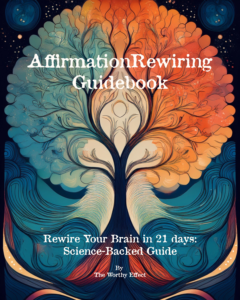
If you’d like to dive deeper into resolving identity drift- explore our Affirmation Rewiring Guidebook.
Recent Posts


Categories
- Conscious Awakening
- Energy & Frequency
- Mindset & Beliefs
- Planet, Purpose & Conscious Living
- Self-Love & Inner Worth