

What Does It Mean To Embody Something?

What Does It Mean To Embody Something?
At first glance, the idea of “embodiment” can feel abstract — almost like a concept you’re supposed to understand, but not necessarily live. It’s often spoken about in personal development, spirituality, and even neuroscience circles. You hear phrases like “embody your truth,” or “step into your highest self.” But what does that actually mean in real, lived experience? And more importantly — if embodiment is about being, not just thinking… aren’t you already doing it all the time? In the deepest, simplest sense — yes. You are always embodying something. But that truth only becomes powerful when you understand the nuance behind it.
You’re Always Embodying — But Not Always Consciously
Embodiment is not something you turn on and off. It’s not a skill reserved for meditation sessions or moments of mindfulness. It is happening constantly. Your body is always expressing something — whether you’re aware of it or not.
At any given moment, you are embodying:
- A belief
- A pattern
- A nervous system state
- A story you’ve practiced
- A truth you’ve integrated
- Or a truth you haven’t integrated yet
Your posture, your tone, your reactions, your energy — these are not random. They are expressions of what your system has learned, practiced, and made familiar. This is where embodiment becomes less of an idea… and more of a mirror. Because once you see this clearly, the question shifts.
It’s no longer: “Am I embodying something?”
It becomes: “What am I embodying right now?”
Embodiment Is Never “Off”
One of the most important things to understand is this: Embodiment doesn’t stop. Even when you’re not paying attention. Even when you’re not trying to change. Even when you feel stuck. You are still embodying.
Which means…
If you’re not consciously choosing what you embody, something else is choosing for you. And most of the time, that “something” is your past.
Automatic Embodiment: When the Past Lives Through You
Automatic embodiment is what most people experience without realizing it. It’s not wrong — it’s just unconscious.
This is when your system is running on:
- Old patterns
- Survival responses
- Inherited beliefs
- Conditioned identities
- Familiar emotional loops
It’s when you find yourself reacting in ways you didn’t choose. When you say “yes” when you meant “no.” When you shrink in spaces you’ve outgrown. When you feel something before you can think your way out of it. This isn’t a sign of weakness. It’s a sign you are human and you have many unconscious programming that has been running the show. Your nervous system is designed to prioritize familiarity over possibility. Research in neuroscience shows that the brain constantly predicts and recreates familiar patterns based on past experience — a concept known as predictive processing.
In other words:
Your system doesn’t ask, “What do you want?”
It asks, “What have you practiced?”
Automatic embodiment is simply your past — still active in the present. It’s:
- Reactive
- Habitual
- Efficient
- Familiar
And often… It’s not aligned with who you’re becoming.
Why Your Nervous System Matters More Than Your Mind
Many people try to change their lives by changing their thoughts.
They repeat affirmations. They set intentions. They visualize outcomes. And while these tools can be powerful, they often don’t stick. Why? Because embodiment happens in the body — not just the mind. Your nervous system determines what feels safe, believable, and possible. If a new belief doesn’t feel safe, your system will resist it — no matter how many times you think it. This is why concepts like polyvagal theory have become so important in understanding behavior and identity. Your state shapes your experience. Your body is not just responding to your life — it is helping create it.
Conscious Embodiment: When You Begin to Choose
Conscious embodiment is where everything begins to shift. This is not about forcing yourself to be different. It’s about participating in who you’re becoming.
Conscious embodiment happens when you:
- Choose a new truth
- Practice a new identity
- Regulate instead of react
- Let your body participate in the change
- Begin living as if the new version of you is already real
This doesn’t mean you instantly become that version. It means you start practicing it — gently, consistently, and believably. Because repetition, especially when paired with emotional safety, is how the brain rewires. This process is supported by research on neuroplasticity, which shows that the brain is capable of forming new neural pathways through repeated experience. Not forced experience. Not imagined perfection. But repeated, lived experience.
The Shift From Reacting to Regulating
One of the clearest markers of conscious embodiment is this: You stop reacting automatically — and start regulating intentionally.
This doesn’t mean you never feel triggered. It means you become more aware and notice when you are feeling triggered.
You pause. You create space. You choose your response instead of defaulting to your past. This is where embodiment becomes a practice — not a concept. Simple tools like breathwork, grounding, and orientation can help bring your system back into safety. Even a few slow breaths can shift your physiological state — something supported by research on heart rate variability and nervous system regulation. This is not about controlling yourself. It’s about supporting your body in experiencing something new.
Automatic vs. Conscious Embodiment
At its core, the distinction is simple — but powerful.
Automatic embodiment = your past living through you.
Conscious embodiment = your becoming living through you.
That’s it. That’s the shift. And that shift changes everything. Because once you see it, you can’t unsee it. You begin to recognize when you’re reacting from old patterns. You begin to feel when something is no longer aligned. You begin to notice the gap between who you’ve been… and who you’re becoming. And instead of forcing change — you start practicing it.
Why This Isn’t About “Fixing” Yourself
It’s important to say this clearly: Conscious embodiment is not about becoming someone better. It’s about becoming someone more true. The goal is not perfection. The goal is alignment. You are not broken. You are patterned. And patterns can change — not through force, but through awareness, safety, and repetition. This is why forcing transformation often backfires. Because the nervous system resists what feels unsafe — even if it looks “better” on the surface.
True embodiment happens when change feels:
- Safe enough
- Real enough
- Believable enough
The Question That Changes Everything
So if you take nothing else from this, take this… You are always embodying something. You always have been. You always will be.
The only real question is: What are you embodying right now — and is it aligned with who you’re becoming?
That question creates awareness. And awareness is where change begins.
A Gentle Way to Begin Practicing
You don’t need to overhaul your life to begin and you don’t need to “become” anything overnight.
You simply start noticing when something arises — a reaction, a feeling, a pattern — pause.
Ask yourself:
- Is this familiar… or intentional?
- Is this my past… or my becoming?
And if it’s your past? That’s okay. Just noticing it is already a shift. Then gently choose something new. A breath. A different response. A softer way of being.
This is how conscious embodiment begins. Not all at once. But over time.
Final Thought
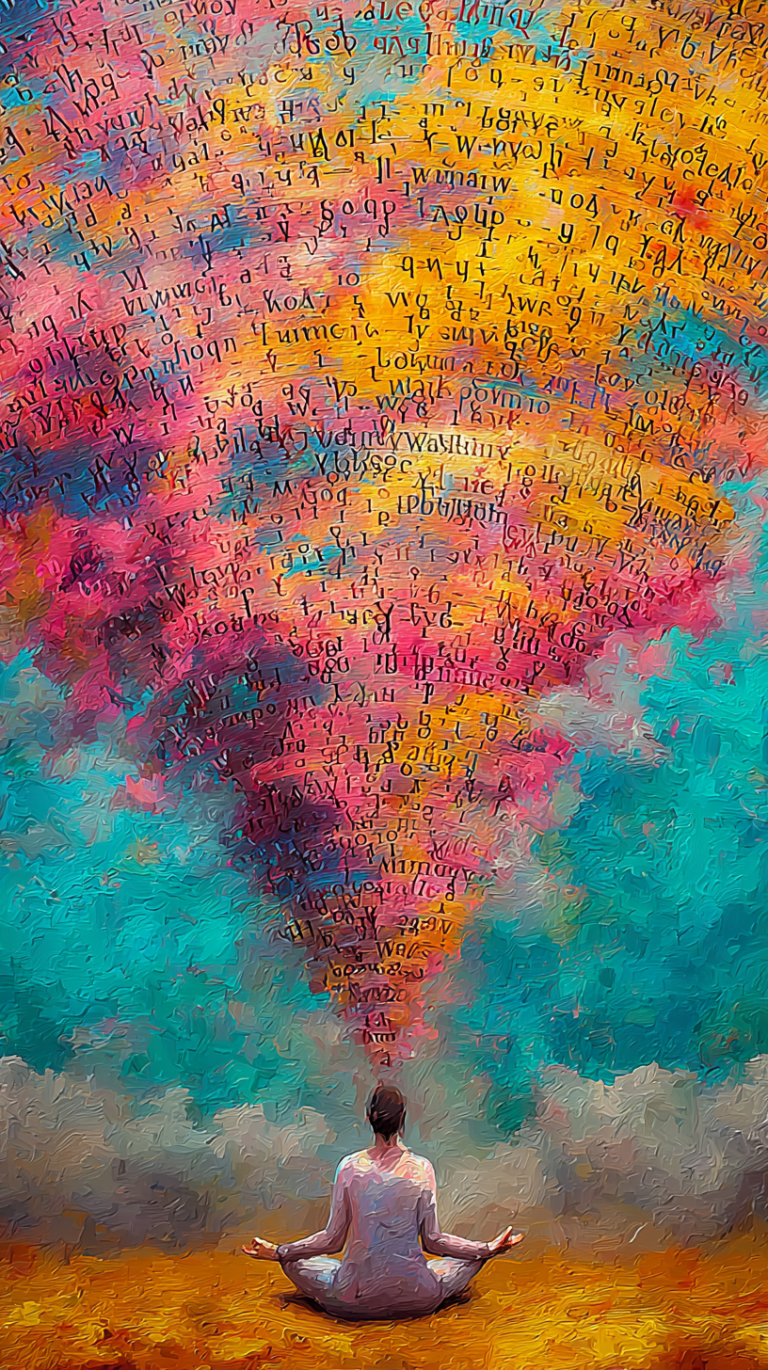
Embodiment isn’t something you achieve. It’s something you participate in. Moment by moment. Choice by choice. Breath by breath.
You never stop embodying… Yyou just begin choosing what gets to live through you.
If you’d like to dive deeper into resolving identity drift- explore our Affirmation Rewiring Guidebook.
Recent Posts


Categories
- Conscious Awakening
- Energy & Frequency
- Mindset & Beliefs
- Planet, Purpose & Conscious Living
- Self-Love & Inner Worth